
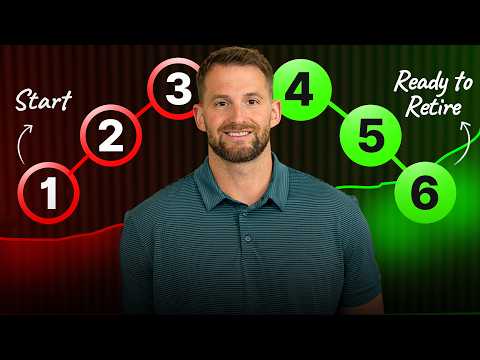
One More Year Syndrome: Why Savers With Enough Won't Retire
Key Takeaways
- One more year syndrome is a behavioral pattern, not a financial one, and it shows up in savers whose plans already work.
- Another year of savings rarely dissolves the hesitation, because a shortfall didn't cause it in the first place.
- Three forces do most of the work: an undefined finish line, an identity built around work, and no one to give you permission to stop.
- Delay isn't free. The years right after you stop working are usually your healthiest and most mobile, and they can't be deferred.
- The practical fix is to write down in advance what would make you comfortable retiring, so the decision isn't re-argued from scratch every December.
There is a version of the retirement problem that has nothing to do with money. The saver has done the work and built a plan that holds up under scrutiny.
And then, quietly, the retirement date moves. Not because anything broke, but because next year feels safer than this one.
Planners see this often enough that it has a name. One more year syndrome is the pattern where someone who has plausibly reached financial independence keeps postponing the decision to stop working, one twelve-month extension at a time, without ever naming a condition that would end the postponing.
Adding more money almost never resolves it. In our experience, someone who moves their date at 62 often moves it again at 63 and 64, with a larger balance behind them each time. That's the tell that the obstacle isn't arithmetic.
In this guide, you'll see:
- What one more year syndrome actually is, and how to spot it
- Why an undefined finish line keeps the date moving
- How work carries more than income, and why that matters when you stop
- Why nobody gives you permission to retire, and what to do instead
Table of Contents
What One More Year Syndrome Actually Is
One more year syndrome is not ordinary indecision. The people it affects are usually decisive everywhere else. What distinguishes it is the moving target: each year the reason for waiting is different, and each sounds legitimate alone.
A bonus vests in March. The market feels unsettled. A project nobody else can finish. Strung together, they form a pattern in which no year is ever the right year.
The clearest diagnostic is to ask what specifically would have to be true for you to feel ready. If the answer is a number, check whether you already passed it once and then quietly raised it. If it's a feeling, notice that a feeling has no threshold and can never be satisfied by another year of saving.
We see this pattern in our work with married couples within ten years of retirement, where confidence in the decision can lag behind the planning work already done.
Some delays are entirely rational. Working two more years to reach a pension milestone or to get a spouse to Medicare eligibility is a decision, not a syndrome. A decision has an end date attached; a syndrome doesn't.
Reason One: The Finish Line Was Never Defined
Most people spend their careers optimizing for accumulation. More is better, and there's no upper bound on better.
That framing works for thirty years and then fails on the last day, because retirement asks a different question: not how much can I accumulate, but how much is enough. Nobody trains for that switch, and a mind that treated more as the goal for decades has no natural place to stop.
Without a defined finish line, every additional year looks like pure upside: more contributions, one less year to fund. The costs of waiting are real but diffuse and hard to picture, so they lose to the concrete-sounding benefit almost every time. That asymmetry keeps the date moving.
Without a defined finish line, every additional year looks like pure upside. The costs of waiting are real, but diffuse and hard to picture.
The counter is to convert the vague feeling into stated conditions before the moment of deciding. Written in a calm month, they're more honest than the ones you generate under pressure. That's where the question becomes answerable rather than emotional, and it's worth understanding when it's actually safe to retire in terms you defined yourself rather than terms borrowed from a headline.
Reason Two: Work Is Carrying More Than Income
For a lot of successful savers, a career supplies things that show up nowhere on a balance sheet. Structure to the week. A reason to be somewhere. Colleagues who know what you're good at. Status that answers the question strangers ask on meeting you.
Retiring hands back the paycheck, which the plan accounts for, and all of that, which it usually doesn't.
People rarely say this out loud. It's easier to say the market looks shaky than to say you're unsure who you are without a title. So the hesitation gets translated into financial language, and everyone answers the financial version, which never touches the real concern. That's why another year of savings changes nothing.
Leaving that unexamined isn't free. The first stretch of retirement is generally when health, energy, and mobility are at their best, and those years can't be moved later in the sequence. David Blanchett's 2013 Morningstar working paper on the true cost of retirement found that real spending tends to be highest in the early retirement years, drift downward through the seventies, and turn back up late as healthcare costs rise. That work measures what retirees spend rather than how they feel, so treat it as evidence about the shape of retirement spending, not proof of a health claim.
Anyone weighing another extension should look honestly at the tradeoffs of working past 62 rather than assuming a delayed start simply shifts the same retirement later. It doesn't. It shortens it, and usually shortens the best part.
Reason Three: Nobody Has Given You Permission
The third force is the quietest. Every other major transition in a professional life comes with an external signal: you were admitted, hired, promoted, or credentialed, and someone else made the call.
Retirement is the first where no one hands you anything. No letter, no committee, no supervisor confirming you met the standard. You authorize it yourself, and people who spent a career responding to external validation have no practice doing that.
Absent permission, the default is to keep going, because continuing requires no justification and stopping seems to require a great deal. So the saver waits for a signal that never arrives and reads its absence as evidence of not being ready.
What helps is separating the two questions that get tangled together: whether the plan supports retiring, which is technical and answerable, and whether you're willing to retire, which is yours alone.
Confusing the second for the first is how a ready household keeps working long after the plan says it could stop. Much of the difficulty is self-imposed, and there's real value in getting out of your own way once the analysis keeps coming back with the same answer.
Is one more year syndrome a real financial planning term?
It is an informal term planners use for a recognizable behavior pattern, not a technical or regulatory definition. It describes repeatedly postponing a retirement date by roughly a year at a time, with no specific condition that would end the postponement, even when the plan appears to support retiring.
How do I know if my hesitation is financial or emotional?
Write down the specific condition that would make you comfortable retiring. If it is a number you have already reached and then revised upward, or if it is a general feeling of readiness with no threshold attached, the obstacle is more likely emotional than financial. A genuinely financial reason can be measured and has an identifiable end point.
Does working one more year meaningfully improve a retirement plan?
It can, but the improvement is usually smaller than it feels, and it is not the only effect. Another year also removes a year from the period when you are most likely to be healthy and active enough to enjoy retirement. Whether that tradeoff is worth making depends on your circumstances and deserves to be weighed deliberately rather than assumed.
What should I do first if I recognize this pattern in myself?
Start by naming what work provides beyond income, such as structure, identity, or social contact, and decide how each would be replaced. Then define your conditions for retiring in writing, while you are not under pressure, so the decision is measured against a standard you set rather than re-argued each year.
Name Your Conditions Before You Need Them
If your plan already works and the date keeps moving anyway, the obstacle probably isn't the math. It's worth naming what's actually underneath it before another year passes.
If you want help putting your own retirement conditions in writing, see how we work together to turn "someday" into a specific, answerable date.
This content is for educational purposes only and is not investment, tax, or legal advice.