

Roth Conversion Strategy
Convert pre-tax savings to Roth before Uncle Sam takes his share.
If you've spent decades building a 401(k) or IRA balance into seven figures, you've also built a tax bill that's grown right alongside it. Every dollar in those accounts is pre-tax, which means a portion of it has always belonged to Uncle Sam. The Rothification Method™ helps 401(k) and IRA millionaires convert that pre-tax wealth to Roth on their own terms, at today's known rates, before required withdrawals and rising tax brackets make the decision for them.
Who This Is For
You've Built the Balance. Now Someone Needs to Plan the Conversion.
This page is built for married couples 50 and older with $1 million or more saved in pre-tax 401(k)s and IRAs who are starting to ask what those balances will actually cost them at tax time, and whether a Roth conversion plan could lower that cost.
You and your spouse are 50 or older, and most of what you've saved for retirement sits in pre-tax 401(k)s and IRAs: $1 million or more, built through years of steady contributions and market growth.
You know Uncle Sam has been a silent partner in those accounts the whole time, and you're starting to wonder how much of that balance is actually going to be taxed away in retirement, especially once required minimum distributions and Social Security land on the same tax return.
You may be sitting in what's called the Golden Window: the stretch of years before RMDs and Social Security start stacking taxable income on top of each other, when your tax bracket could be lower than it will ever be again.
You want to protect your spouse from the widow's penalty: the tax bracket increase that hits a surviving spouse when they start filing as single on income that used to be taxed jointly.
If that sounds like your situation, this is exactly who the Rothification Method™ was built for.
How It Works
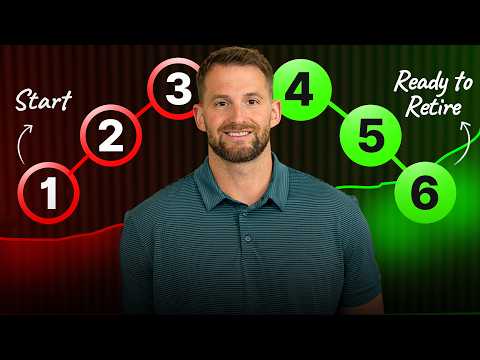
The Rothification Method™, Step by Step
Here is the short version of how Roth conversions get approached inside your broader retirement plan. For the full tax-first planning process, see Retirement Planning.
Step 01 · Analysis
Analyze Your Conversion Capacity
Your current and projected tax brackets get modeled to find out how much you can convert each year without crossing into the next bracket or triggering an IRMAA surcharge on your Medicare premiums.
Step 02 · Execution
Execute Conversions Strategically
Conversions get timed around market downturns, income gaps between retirement and Social Security, and the rest of your retirement income plan, so each conversion works with your overall strategy instead of against it.
Step 03 · Ongoing
Monitor and Adjust
Tax law changes. Markets move. Your life changes. Your conversion plan gets revisited every year to keep it aligned with what's actually happening, not what was assumed a year ago.
The Case for Converting
Why Roth Conversions Matter for 401(k) and IRA Millionaires
Every dollar sitting in a traditional 401(k) or IRA has a silent partner attached to it: the government. You got a tax deduction when the money went in, which means income tax is still owed on it, along with all the growth that's happened since. Nobody sends you a bill for that partnership. It just sits there, growing right alongside your balance, until you start taking money out.
A Roth conversion is how you buy out that partner's stake at today's known tax rate, rather than at whatever rate applies the year you're forced to withdraw. Once the money moves to a Roth account, it grows and can be withdrawn tax free, for you and eventually for your heirs, with no future tax bill attached.
For 401(k) and IRA millionaires, this isn't a minor optimization. On a balance of $1 million or more, the difference between converting some of that money at a known, moderate rate today versus paying tax on required withdrawals at an unknown, possibly higher rate later can add up to a meaningful amount of money that either stays in your family or goes to the IRS.
Timing
The Golden Window for Conversions
Most people's taxable income follows a predictable shape: it rises during their working years, drops in the gap between retirement and when Social Security and required minimum distributions begin, then rises again once both kick in. That gap, however long or short it is for you, is what's called the Golden Window.
During the Golden Window, your reportable income may be lower than at any other point in retirement. That means you can convert pre-tax dollars to Roth and pay tax on the conversion at a lower rate than you'd otherwise pay once RMDs and Social Security are both showing up on your return every year.
The window doesn't stay open forever. Once RMDs start at 73 or 75, depending on your birth year, they add to your taxable income whether you need the money or not, and the room you had to convert at a low rate starts closing. The years before that point are worth planning around deliberately rather than letting them pass by unused.
Medicare Costs
How Roth Conversions Reduce IRMAA Surcharges
IRMAA stands for the Income-Related Monthly Adjustment Amount, and it's the mechanism Medicare uses to charge higher premiums to higher earners. The surcharge is based on your modified adjusted gross income from two years earlier, and it applies to both Medicare Part B and Part D.
The math that determines your IRMAA bracket is largely driven by the size of your required withdrawals, since RMDs count as ordinary income. Larger pre-tax balances produce larger RMDs, which produce higher modified AGI, which can push you into a higher IRMAA bracket, sometimes without you realizing it happened until the premium notice arrives.
Converting some of your pre-tax balance to Roth now, ahead of when RMDs start, lowers the balance those future RMDs will be calculated on. Smaller RMDs mean lower modified AGI, which means a better shot at staying under the IRMAA thresholds later. It's one of the more overlooked reasons Roth conversions belong in a retirement plan: they're not just about income tax, they're about what you pay for Medicare too.
For Your Spouse
Protecting Your Surviving Spouse
When you're married, you file taxes jointly, and the tax brackets for joint filers are wider than the brackets for single filers. When one spouse passes away, the survivor typically has to file as single starting the following year, on roughly the same income the couple was earning together.
That shift, sometimes called the widow's penalty, can push the surviving spouse into a meaningfully higher tax bracket on the exact same retirement income the couple was managing comfortably before. RMDs from a large pre-tax balance don't shrink just because one spouse is gone. The tax bill on them can grow.
Roth conversions completed while both spouses are alive reduce the pre-tax balance that will eventually generate those forced withdrawals, and move that money into an account the surviving spouse can access tax free. It's one of the more compassionate reasons to convert sooner rather than later: it protects the person who'll eventually be managing this alone.
What to Avoid
Common Roth Conversion Mistakes
The same handful of mistakes tend to derail an otherwise sound conversion plan. Here are the ones to watch for.
Waiting too long
The Golden Window closes once RMDs and Social Security begin. Waiting until retirement is already underway to start planning often means missing the years when conversions cost the least.
Converting everything at once
A single large conversion can push you into a much higher bracket in one year and trigger an IRMAA surcharge you didn't need to pay. Spreading conversions across several years, sized to your bracket, usually costs less overall.
Ignoring tax diversification
Converting all of your pre-tax savings removes the flexibility that comes from having pre-tax, Roth, and taxable accounts to draw from. Keeping some balance across all three usually serves you better than an all-or-nothing approach.
Not coordinating with healthcare costs
If you're relying on ACA marketplace coverage before Medicare eligibility, a large conversion can increase your income enough to reduce or eliminate your premium subsidy. Conversion amounts need to be weighed against healthcare costs, not decided in isolation.
Common Questions
Roth Conversion FAQ
Straight answers to the questions asked most about Roth conversion timing, amounts, and Medicare costs.
- There's no single number that applies to every household. The right amount depends on your current tax bracket, how much room exists before the next bracket, and how a conversion interacts with IRMAA thresholds and other income. Your specific numbers get modeled each year rather than applying a rule of thumb.
Next Step
Ready to Keep More of What You've Built?
If you and your spouse have $2M or more in investable assets, a tax-first retirement plan helps you keep more of it, year after year.
Areas Served
Serving Clients Nationwide, With Local Expertise Across Kansas City
Roth conversion strategies are built here for 401(k) and IRA millionaires across the country, based in Overland Park, Kansas, with deep roots in Johnson County communities including Olathe, Lenexa, Leawood, Prairie Village, Shawnee, and Mission. If you're local to the Kansas City metro, find your community below.